top of page


.jpg)
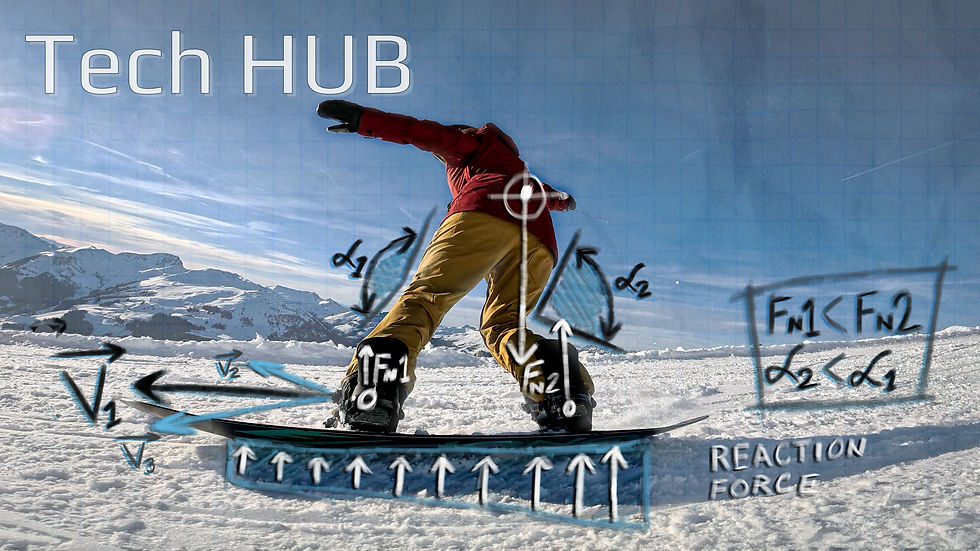
We acknowledge that your legs aren’t doing the same job in snowboarding - they’re a high-performance duo with distinct roles. That’s why ShredLORD treats them differently.
Your front leg sets the direction. Precision and fast response are key. This is why your front leg stays almost straight - ready to transmit force instantly to the slope with minimal impact absorption.
Your back leg keeps the edge. Strength and flexibility are key. This is why your back leg bends more - ready to absorb impacts and counter the reactive forces from the slope.
This is why we provide ShredLORD as a shock absorption adapter that you mount only on your back leg to preserve your front leg’s finesse while offloading your back leg.
The result? A stable stance throughout your ride, less bumps on your back leg, and more control over your edge.
ShredLORD is designed to help you ride with more confidence, control, and stamina.
ShredLORD Snowboard Vibration Dampening Technology
ShredLORD Snowboard Vibration Dampening Technology
Yeah, Science!
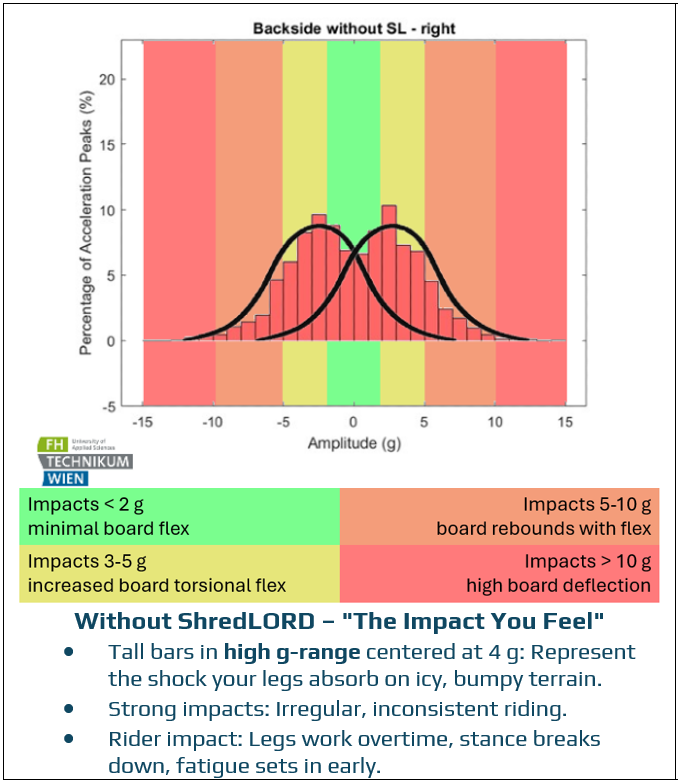
Impacts shift from high g-jolts to smooth low g-absorption*
ShredLORD absorbs high-impact shocks so you don't have to. ShredLORD makes sure that the impacts your legs take are low in g-force. This helps a bumpy, chattery ride feel smoother and more manageable.

Reaction time cut by half*
ShredLORD absorbs the chatter before you even register it. While your reflexes catch up, vibration is absorbed. Ride with instincts — we've got the rest.
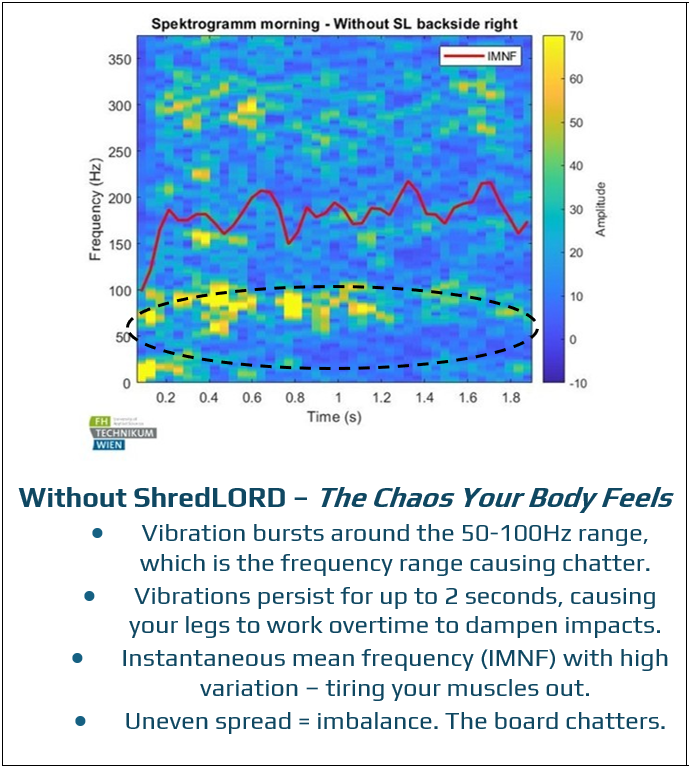
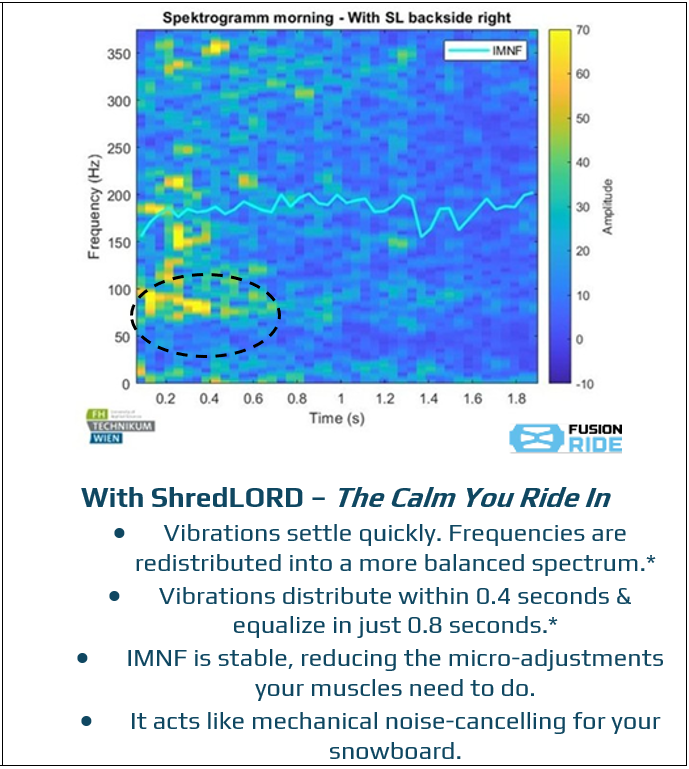
You can even hear the difference:
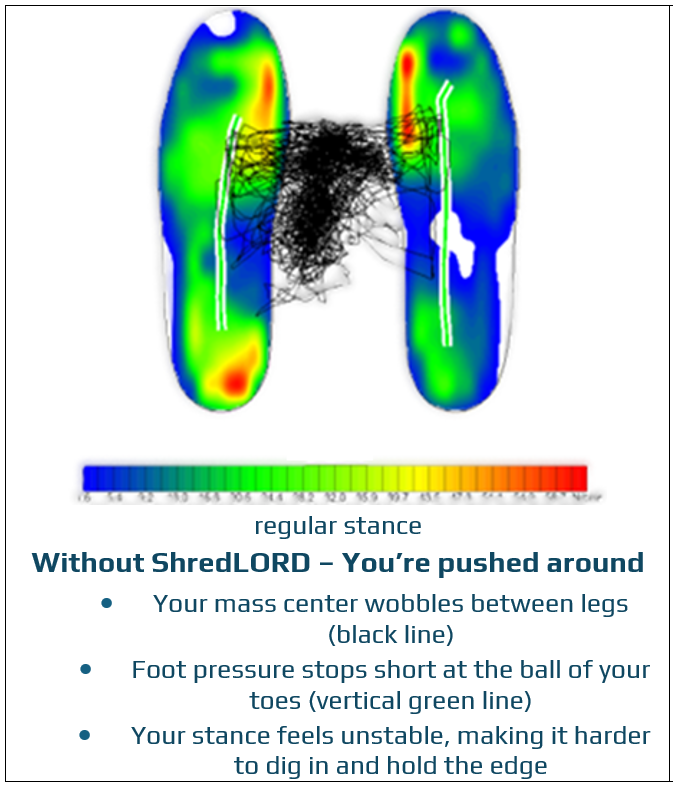
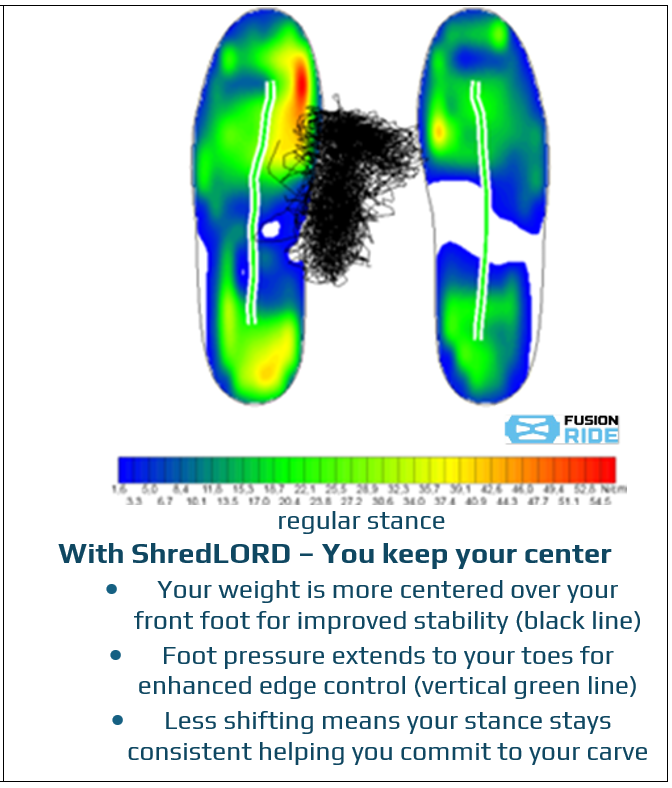
Centered stance *
With the pressure off your back foot, you stop bouncing between legs and start carving with more control. The result is more pressure on the edge, less chatter, buttery-smooth turns and better balanced stance.
The Bottom Line
ShredLORD keeps your gravitational center locked on your front foot. The enhanced edge control turns every run into a precision ride.
ShredLORD cuts vibration time by more than half. The result is a ride that feels more responsive and in your control.
*All scientific data is based on testing in controlled on-field conditions conducted with FH Technikum Vienna. Results will vary based on snow conditions, rider weight, riding style, and other variables.
Direct comparison of first prototype trials
bottom of page